Floor Sanding and Polishing Brisbane — Brisbane licensed floor sanders Call 0468 158 248

Floor Sanding and Polishing Brisbane — Timber Floor Restoration

Floor Sanding and Polishing Brisbane connects property owners with QBCC-licensed floor sanders across greater Brisbane — sanding, polishing, board repairs and the hardwood and hoop pine hiding under carpet in half the houses in this city. Priced per square metre, after the boards have actually been looked at.

Quoted after a look, not over the phone
Licensed and insured operators
Written quote you keep

Talk it through

No obligation. Takes 30 seconds.

No obligation. Your details go to one licensed floor sander covering your suburb.

Why useFloor Sanding and Polishing Brisbane

Floor sanding is a licensed QBCC class in Queensland, and the register is free to search before anyone starts.

Licensed, and checkable

Floor sanding has its own QBCC class in Queensland. Every contractor referred here holds one and you can verify it on the public register before they start.

They'll tell you if the floor isn't ready

A cupped or damp floor needs to stabilise before it's sanded. A sander who says 'let's wait and take a moisture reading' is doing you a favour, not stalling.

Dust extraction as standard

Modern machines run vacuum extraction. It isn't dust-free, but it's a different world to the drum sanders people remember.

A firm price per square metre

Measured and quoted properly, with the coats and the carpet-lift spelled out.

Not sure which of those you need?

Tell us what the floor is doing and we will point you at the right one.

Timber floor services across Brisbane

The jobs that come up most. Pick what's closest to your situation — or just tell us what's happening and we'll work it out.

See all 16 services

How a timber flooris actually sanded

The work is covered by an Australian Standard — AS 4786.2, Timber flooring: sanding and finishing — which applies to existing floors as much as new ones. Worth knowing what a proper job involves, because most of it is invisible once the furniture goes back.

01

The moisture reading comes first

Australian hardwood flooring is manufactured to 9–14% moisture content under AS 2796, and most mills supply at 10–11%. What it settles at in your house is decided by humidity: at 25°C, 60% relative humidity gives about 11% moisture content — but 80% humidity gives about 16%.

Brisbane sits in that upper band for much of summer. A board made at 10–11% equilibrating toward 16% has moved roughly five points, and that movement is what cups a floor. It is why a reading, not a look, decides whether a floor is ready to sand.

02

Three cuts, and you cannot skip a grit

Sanding runs progressively finer — typically 36 or 40 grit to take off the old finish, then 60, then 80, finishing at 100 or 120.

The rule is that each grit has to remove the scratch pattern left by the one before it. Jumping from 40 straight to 100 leaves coarse scratches that the finer paper cannot reach; you will not see them on bare timber but the first coat of finish will show every one. Skipped grits are the most common reason a floor looks wrong under light after it is coated.

03

Edges and corners are a separate machine

The big belt machine cannot reach the perimeter, so edges are done with a smaller rotary edger and corners often by hand.

This is slow, and it is where the difference between operators shows. A visible line where the edger work meets the main floor — 'edger burn' or a halo around the room — is the classic sign of rushed perimeter work, and it cannot be fixed by coating over it.

04

Coats, and the time between them

Three coats is standard, four where traffic is heavy. Between coats the floor is lightly abraded again so the next coat keys to it rather than sitting on top.

Water-based finishes allow recoating in as little as 6 to 24 hours, so a floor can sometimes take all its coats in a day. Solvent-based polyurethane needs 24 to 48 hours between coats, which is why it takes longer overall.

05

What the Standard does and does not settle

AS 4786.2 includes guidance on inspecting a finished floor, but it deliberately stops short of setting precise tolerances for individual marks or imperfections — it says assessment relies on judgement and varies with the situation.

So 'it meets the Standard' is not a complete answer to a dispute about appearance. Agree what you expect before the work starts, and view the floor in the light it will actually live in.

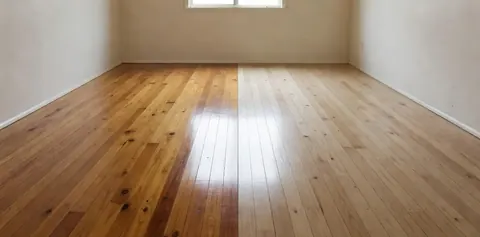
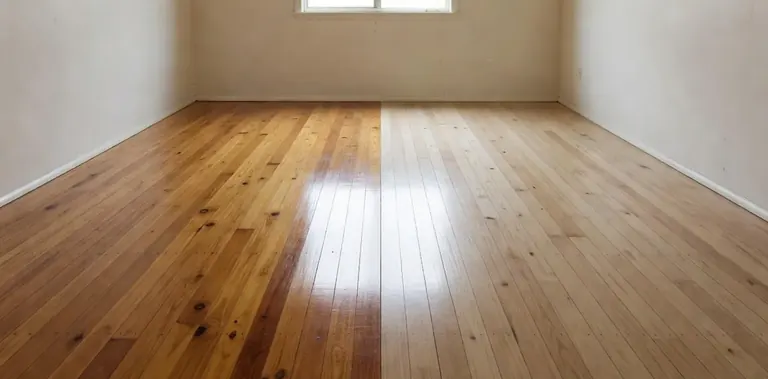
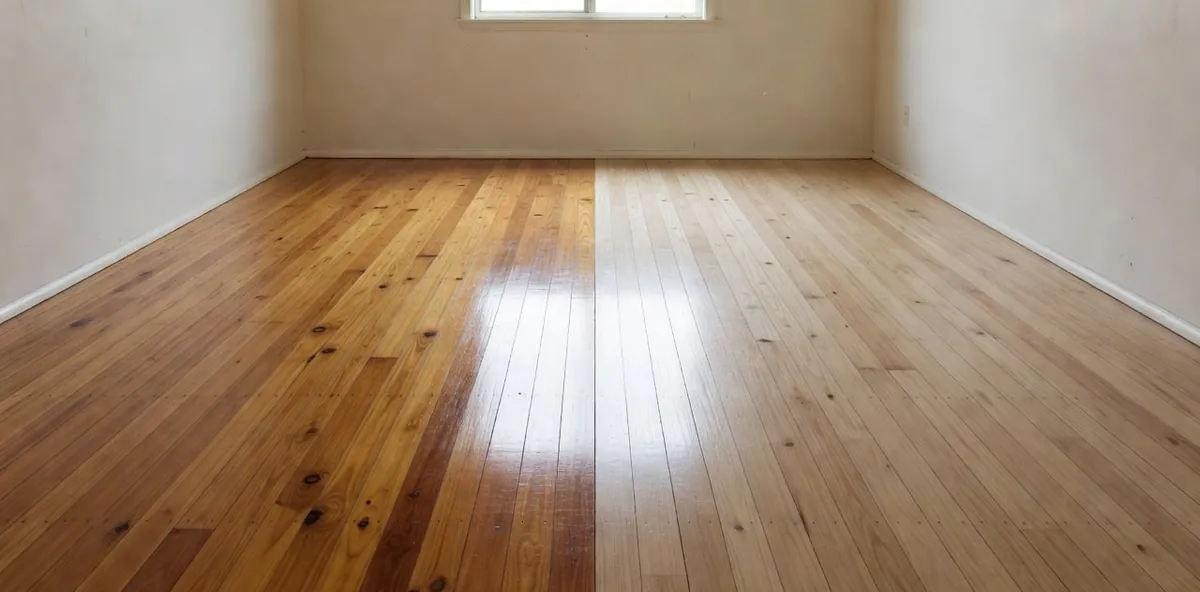
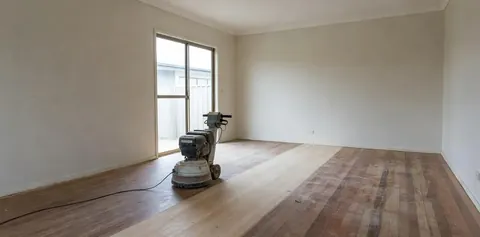
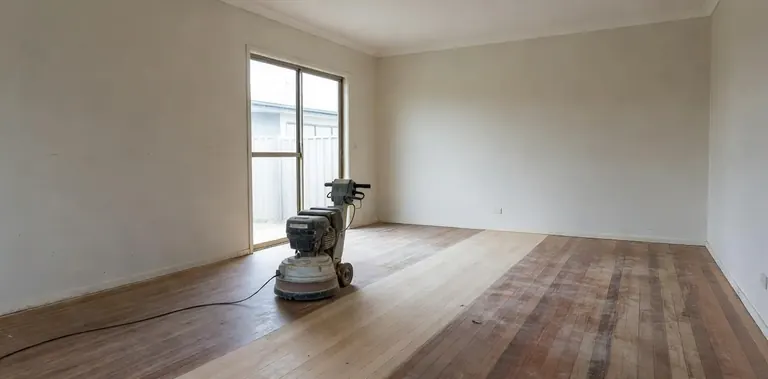
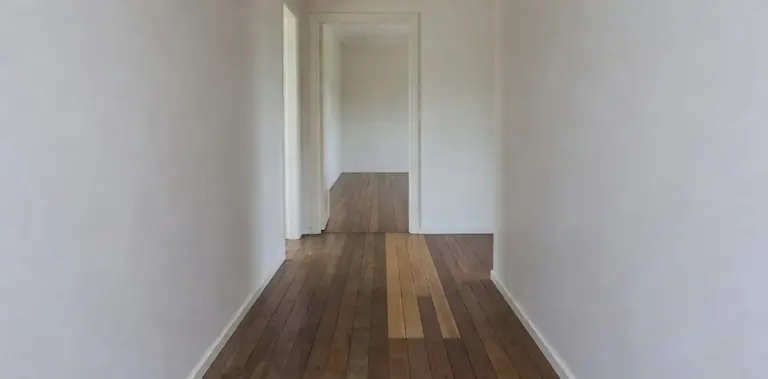
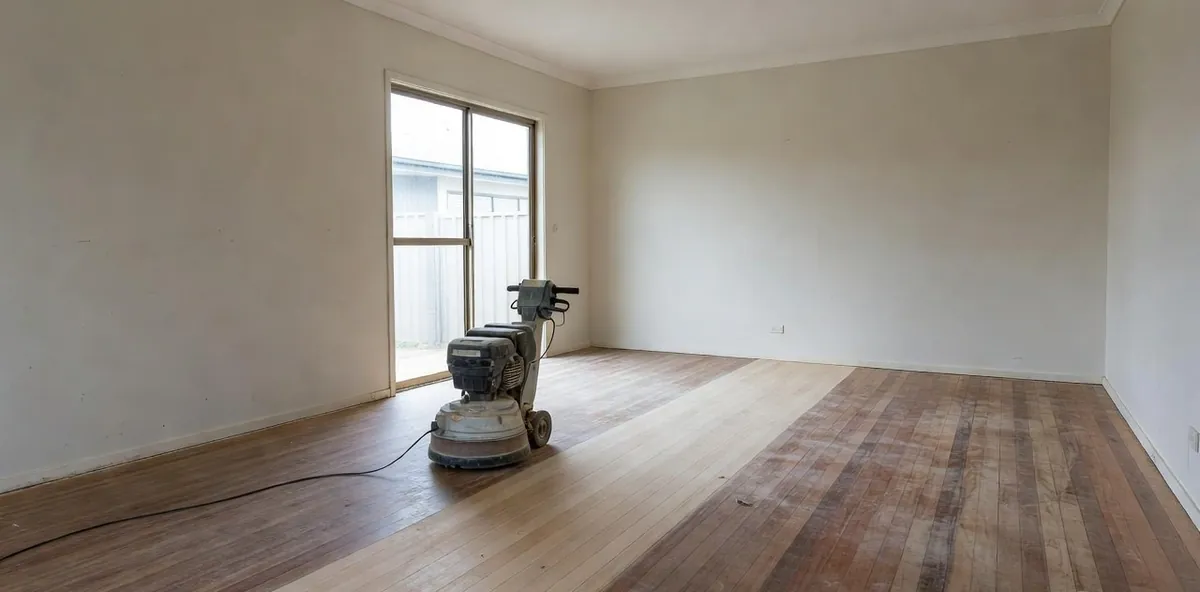
A drum sander part way across a hardwood floor, the sanded half visibly lighter than the unsanded half.

The moisture reading decides the timing

Sanding a floor that has not settled to the humidity of the house is the one mistake that cannot be sanded out afterwards. It is why a good operator measures before quoting a start date.

What Brisbane floors actually need

Three things bring a floor sander to a Brisbane house, and the first one is the reason this trade exists here at all.

There is almost certainly a timber floor under that carpet

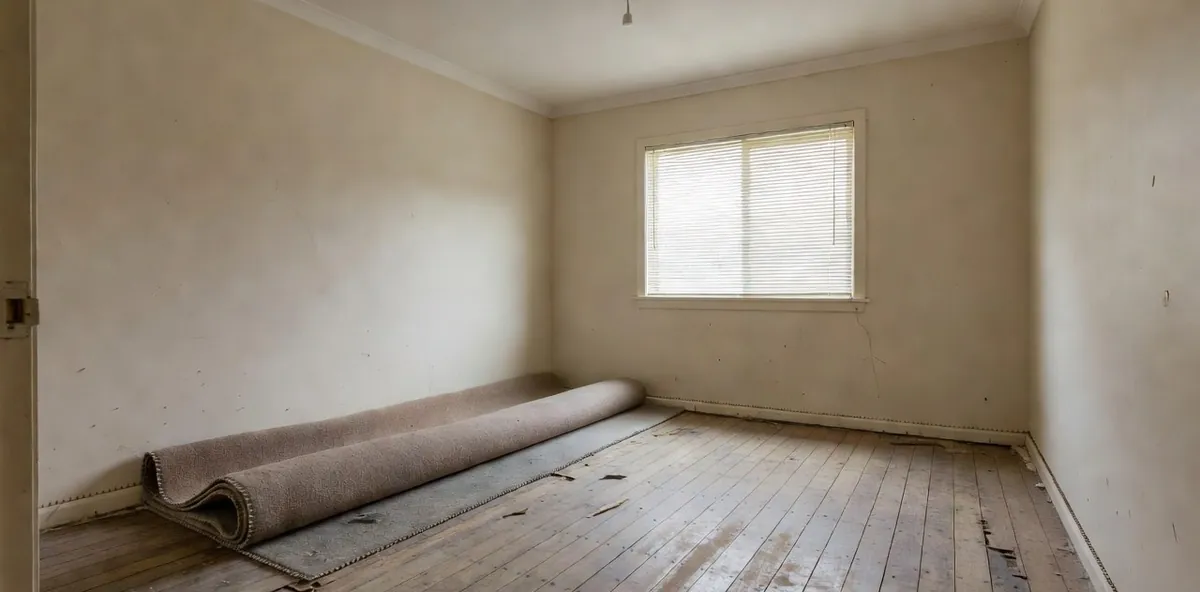
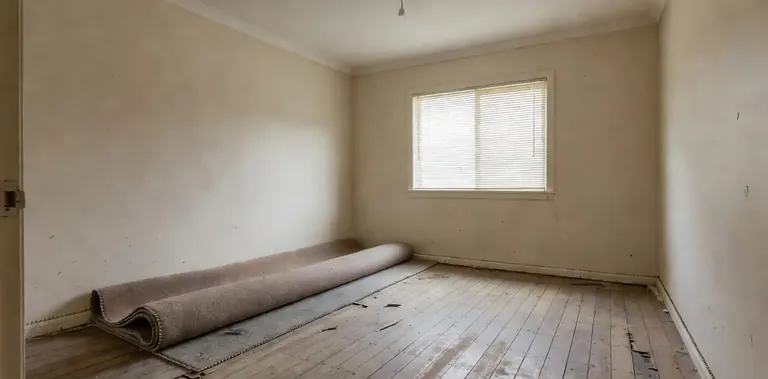
Most Brisbane housing built before about 1960 has hardwood or hoop pine boards under whatever was laid on top. Carpet went down over perfectly good floors through the sixties and seventies, and a great deal of it is still there. Pulling it up and sanding what's underneath is usually far cheaper than laying a new floor, and on a Queenslander it is the single change that most transforms a room. The catch is that you don't know what condition the boards are in — or how many tack strips and staples went through them — until the carpet is up.

Humidity moves timber here more than anywhere

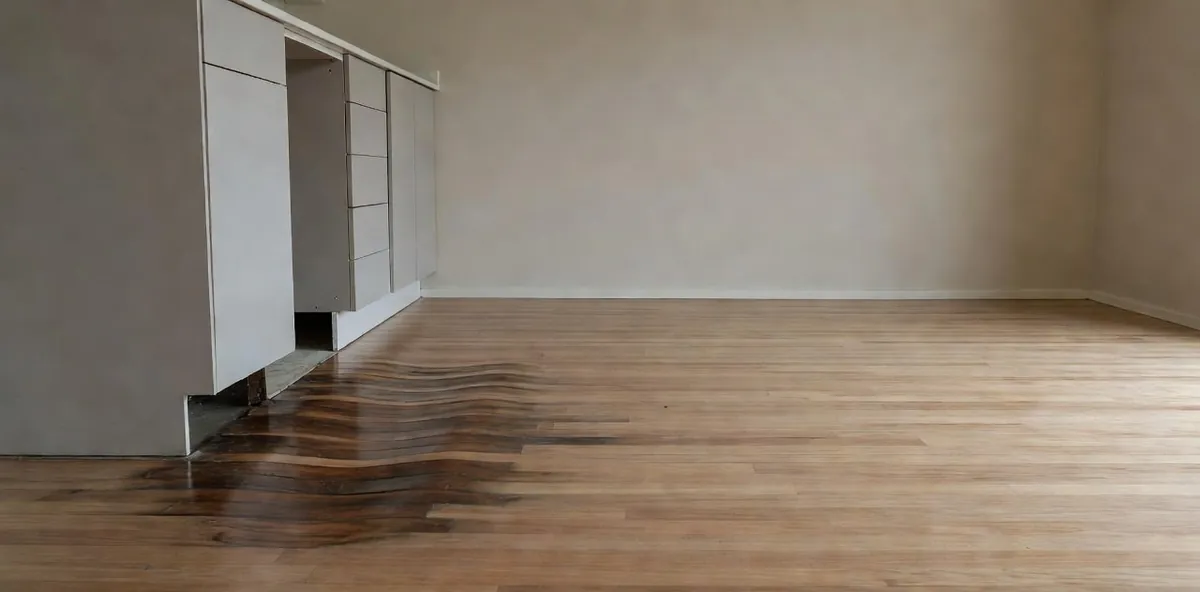
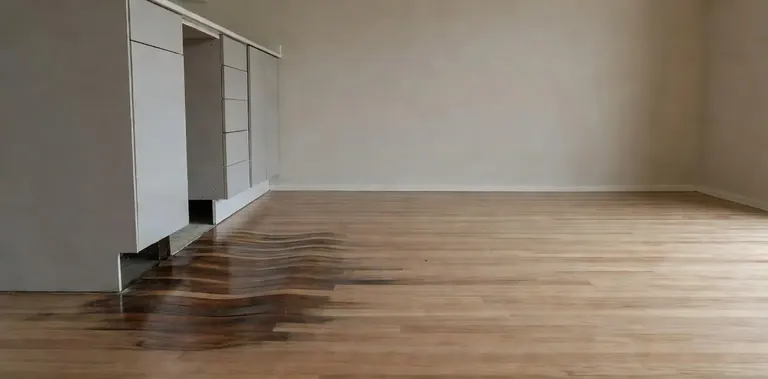
Brisbane's wet season swells boards and the dry pulls them back, and that annual cycle shows up as cupping — the edges of each board sitting higher than the centre. Sanding a cupped floor before it has stabilised just takes the high edges off, and when the timber relaxes you are left with a dished board and less thickness to work with. A floor that has recently been wet needs time and a moisture reading, not a sander.

Termites and borers get into floors, not just frames

Subfloor timbers and the boards themselves are both at risk here, and damage is regularly discovered only when the carpet comes up. Sanding will not fix a structurally compromised board — it needs replacing, and the source dealt with first. Any sander who finds it should be telling you to get a pest inspection rather than coating over it.

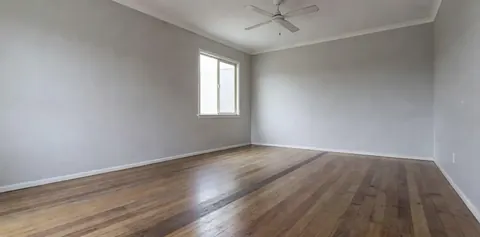
A cupped timber floor in a Brisbane home after water damage

The pattern behind all of that is the same: a lot of Brisbane's timber went under carpet in the sixties and never came back out. Which means the most common job here isn't laying a new floor — it's rescuing one that's been sitting there for fifty years.

What does it cost to sand and polish floors?

Sand and polish runs $35 to $60 a square metre, so a three-bedroom house lands around $3,800 to $6,500. A recoat, if the timber is sound, is $18 to $30 — worth asking about before you commit to a full sand.

See the full price guide

How long does floor sanding take?

The second question after price, and the one that decides whether you can stay in the house. The sanding is the short part.

Sanding itself1–2 daysA typical three-bedroom house. Edges and corners take disproportionately longer than the open floor.
Whole job, start to finish3–5 daysSanding plus three coats with drying time between each.
A single room1–2 daysSetup and drying dominate, so a small job is not proportionally quicker.
Walk on it (socks)~24 hours after the last coatBoth finish types. Light foot traffic only.
Furniture back48 hours water-based · ~72 hours solventLift furniture in, never drag it. Felt pads before anything sits down.
Rugs down, full cure4–7 days water-based · up to 30 days solventA rug laid on uncured finish can mark it permanently. This is the step people rush.

What makes a job take longer

Curing times vary by product. Ask for the specific figures for the coating being used rather than working from a general rule — it is the one number worth having in writing.

Does a floor sander need a QBCC licence?

Floor sanding looks like cosmetic work, so people assume anyone can do it. In Queensland that's wrong — there's a specific licence class covering exactly this, and it's worth two minutes to check before you let a machine loose on a floor you can't replace.

Approval is required for:

  • floor sanding, polishing and coating — this is a specific QBCC licence class, **Floor finishing and covering (hard sector)**, whose scope expressly includes 'prepare, sand and apply coatings to timber floors'
  • any building work valued over $3,300, which most whole-house sanding jobs exceed
  • replacing structural floor boards or joists, which is building work in its own right

Approval is not required for:

  • an owner sanding their own floor — though hire-shop drum sanders remove a surprising amount of timber very quickly, and a gouged board cannot be un-sanded
  • genuinely minor work under $3,300 with no structural element — a single board, a small patch

The QBCC register is free and public — search the licence number before work starts. It matters here because sanding is irreversible: a floor has a finite number of sands in it, and an over-sanded or gouged board can't be put back. Unlicensed building work also sits outside the Queensland Home Warranty Scheme. Source: Brisbane City Council. Yes — there's a named class for it, Floor finishing and covering (hard sector), and its scope expressly covers sanding and coating timber floors. Most people assume this trade is unlicensed.

Full permit rules explained

Areas we cover near Brisbane

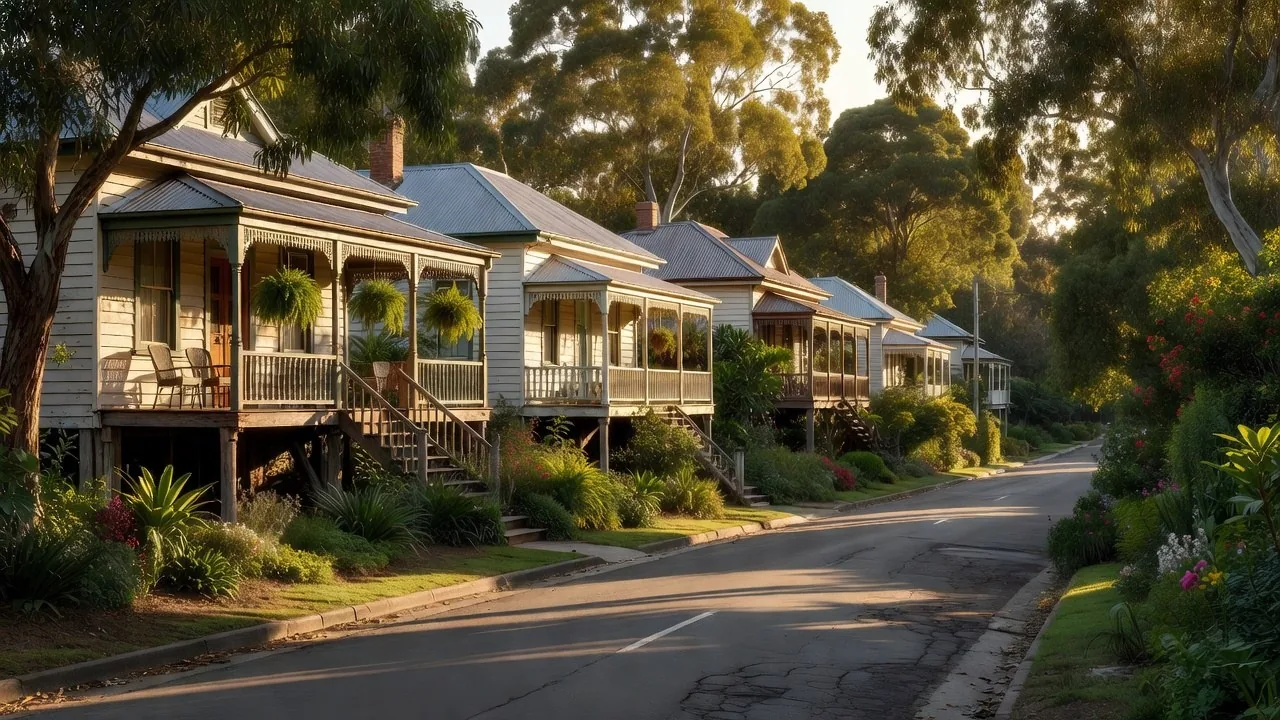
Coverage runs across greater Brisbane — the inner suburbs where the old boards are, out to Ipswich, north to Redcliffe, and east to the bayside.

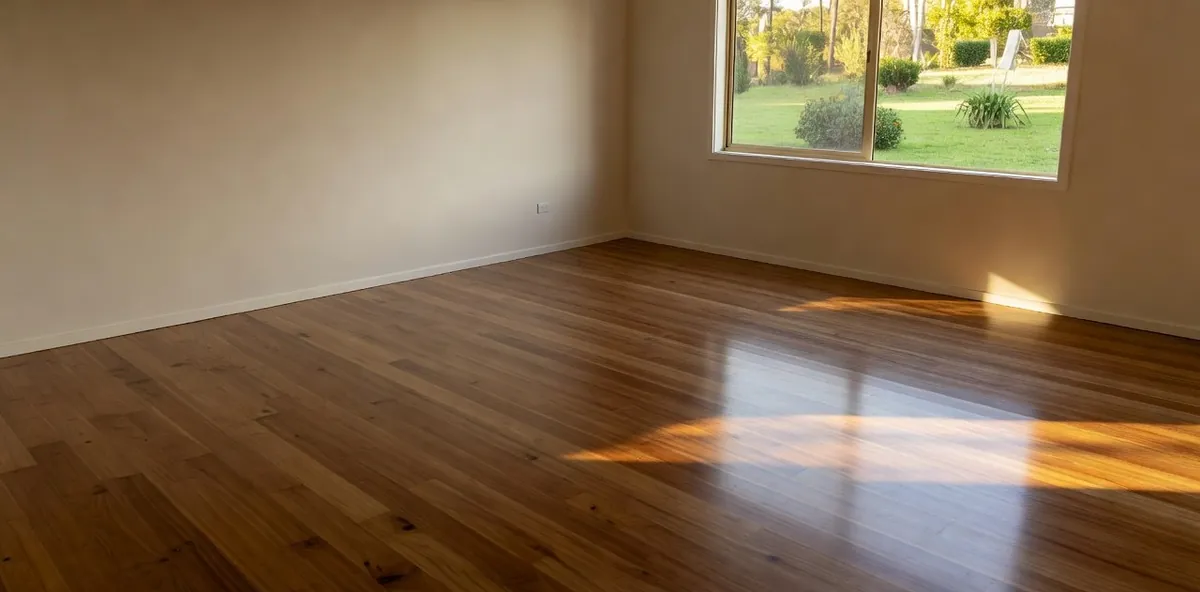
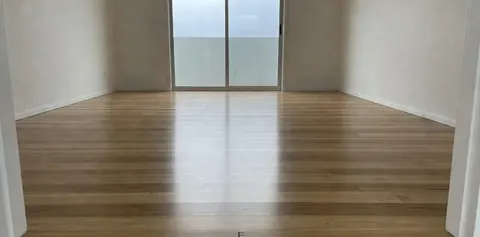
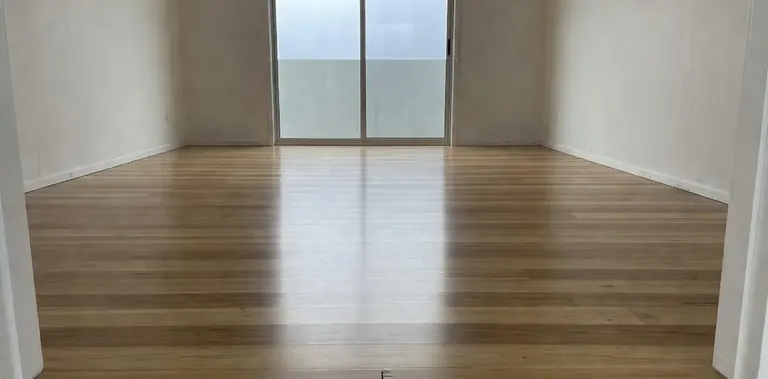
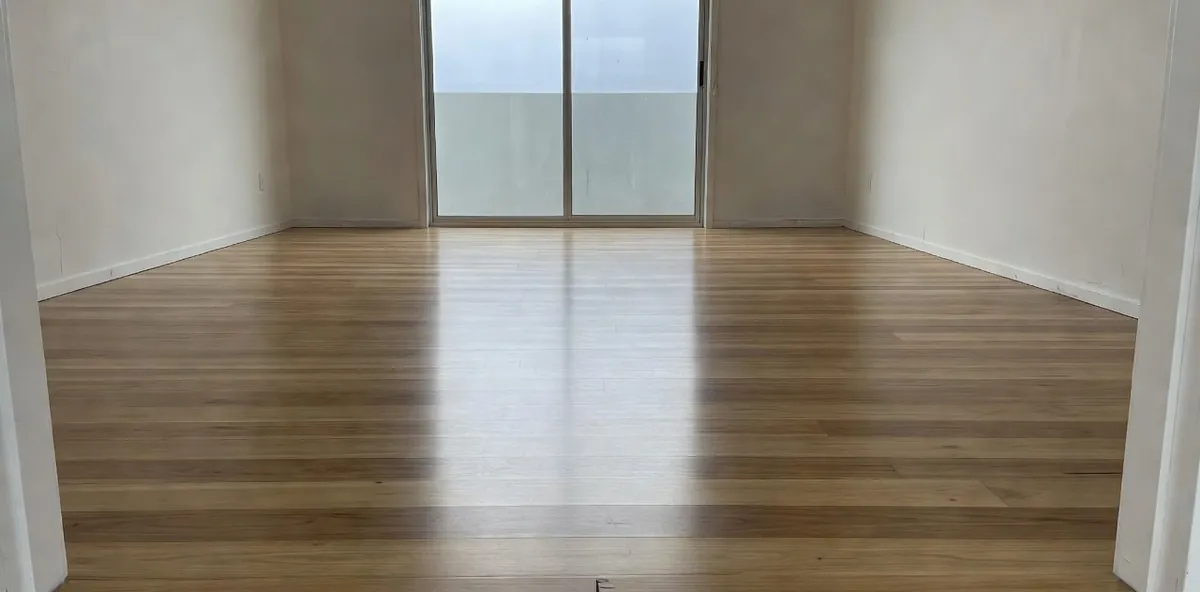
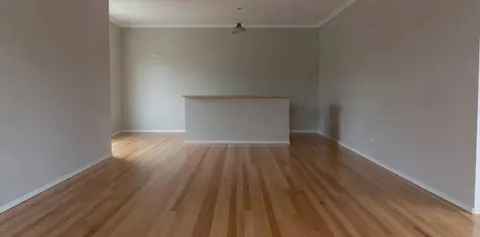
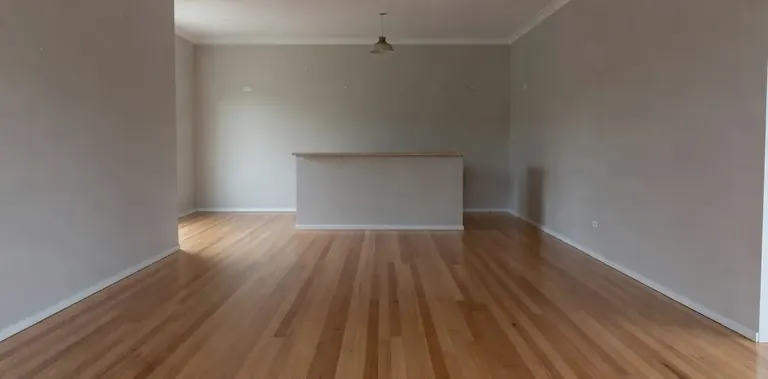
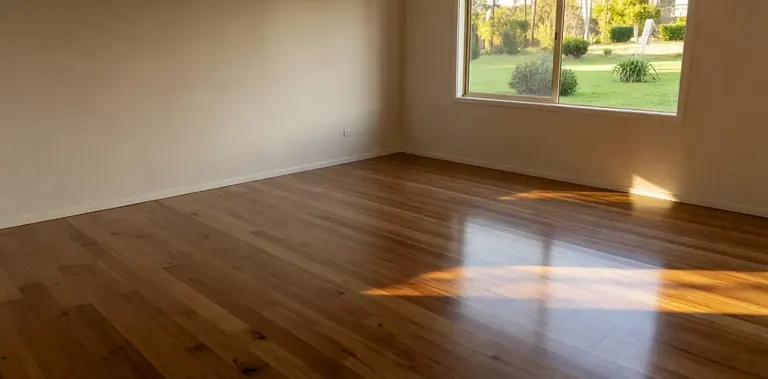
Sanded hardwood floorboards in a Brisbane Queenslander
Brisbane CityNew FarmPaddingtonAshgroveBardonToowongIndooroopillySherwoodGracevilleAnnerleyHolland ParkCamp HillCoorparooBulimbaHawthorneMorningsideNorman ParkWilstonWindsorClayfieldHendraNundahWooloowinRed HillKelvin GroveAuchenflowerMiltonWest EndHighgate HillGreenslopesTarragindiCarinaIpswichRedcliffeClevelandWynnumSandgateManlyChelmerCorindaMount GravattCarindaleCapalabaChermsideAspleyStaffordEverton ParkMitcheltonThe GapKenmoreSt LuciaMoorookaSalisburySunnybankLogan CentralBeenleighGoodnaSpringfield LakesNorth LakesHamilton

Questions Brisbane homeowners ask

Can an engineered timber floor be sanded?

Sometimes, and one number decides it: the thickness of the real timber wear layer on top of the core. Around 6mm takes two or three sands, 3mm takes one careful sand, and under about 2mm should be recoated rather than sanded. A click-lock floating floor with a 0.6mm veneer cannot be sanded at all. Lift a vent or a threshold and look at the edge of a board before anyone quotes.

Will the colour change after the floor is finished?

Yes, and how much depends on the finish. Solvent-based polyurethane ambers the timber warmly and keeps ambering for years, so a repair patched in later will not match. Water-based goes on clear and stays clear. Australian hardwoods also darken on their own with light exposure, which is why a rug moved after two years leaves a pale rectangle.

Do you sand decks and stairs as well as floors?

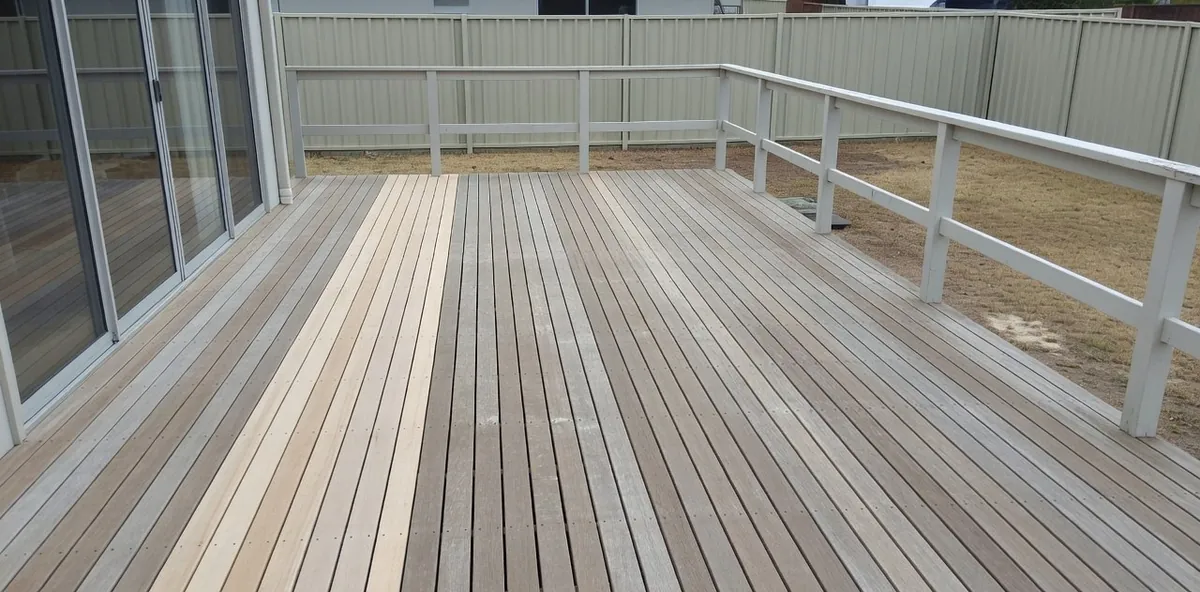
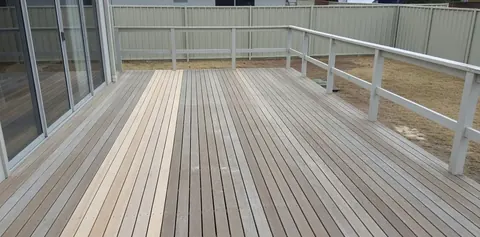
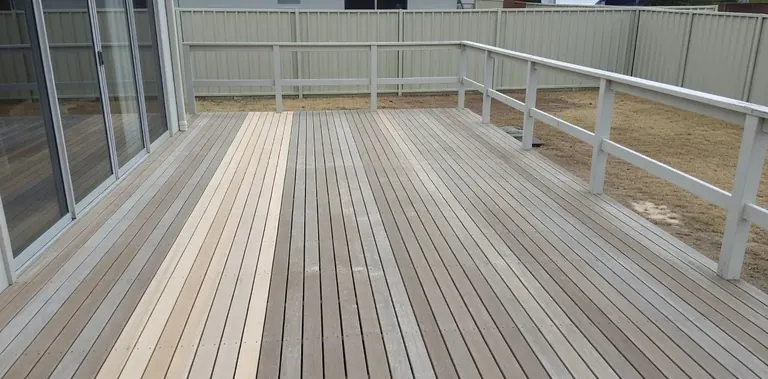
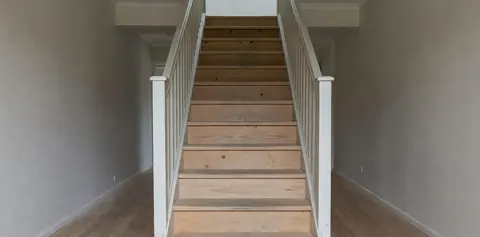
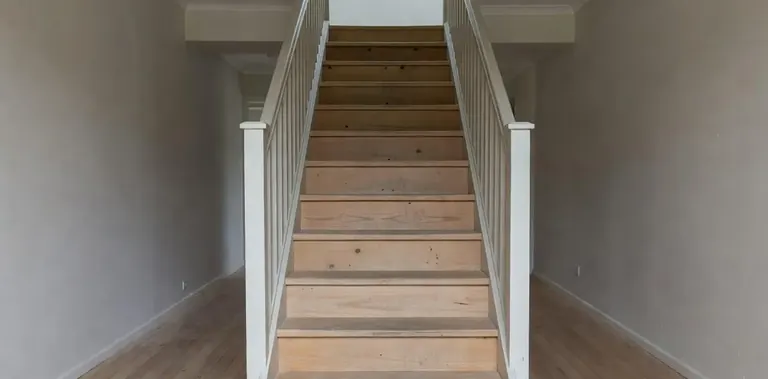
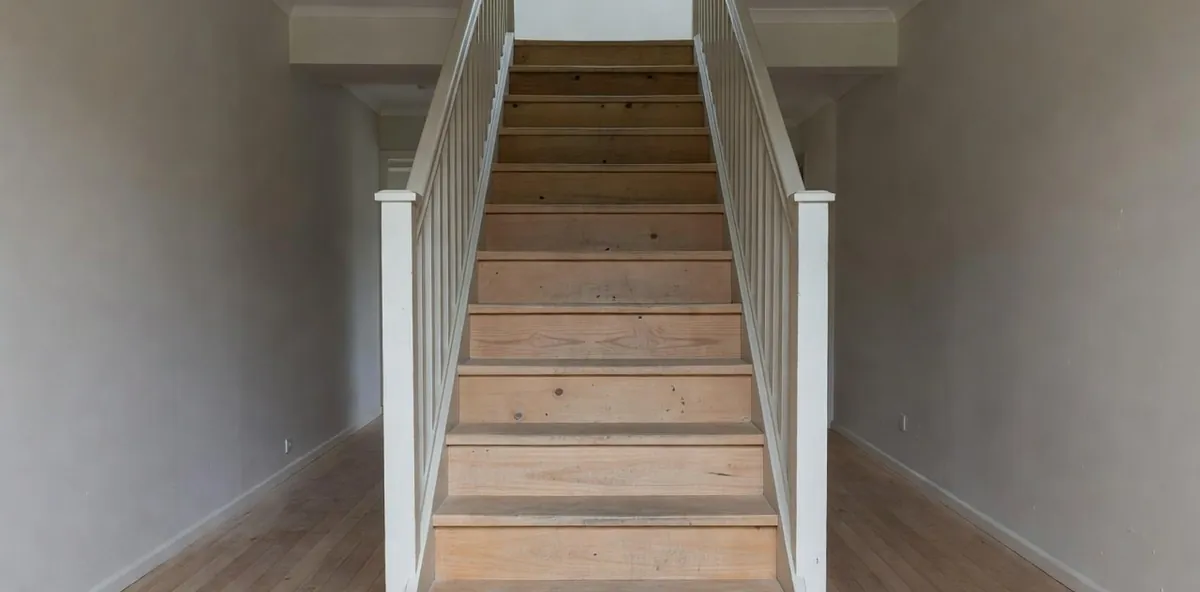
Yes, and both are quoted differently. A deck is finished in penetrating oil rather than a film coating, because a hard film cracks outdoors and lifts. Stairs are quoted per flight rather than per square metre, because there is almost no machine work in them — treads, risers and nosings are largely done by hand.

How do I look after the floor once it is done?

Sweep or vacuum more than you mop; grit is what actually scratches a floor, not water. Use a barely damp mop and a cleaner made for the finish you have, never a general supermarket floor cleaner, and never anything with silicone or wax in it — they build up a film that has to be sanded off before the floor can ever be recoated. Felt pads under furniture, and a mat at every external door.

Is there timber under my carpet?

In Brisbane housing built before about 1960, very often yes — hardwood or hoop pine. Carpet was laid over sound floors through the sixties and seventies and a lot of it never came up. Lift a corner in a wardrobe or behind a door and have a look. What you can't tell that way is the condition, or how many tack strips and staples went through the boards, which is what an inspection is for.

Do floor sanders need a licence in Queensland?

Yes. There's a specific QBCC class — Floor finishing and covering (hard sector) — and its scope expressly includes preparing, sanding and applying coatings to timber floors. The general $3,300 threshold applies on top, which most whole-house jobs exceed. People assume sanding is unlicensed because it looks like surface work. It isn't.

How many times can a floor be sanded?

A solid hardwood floor typically has three to five full sands in it over its life, depending on board thickness and how much was taken off previously. Engineered boards may have only one, sometimes none. This is why a light recoat is worth asking about where the timber is sound and only the finish is worn — it uses none of that budget.

What's cupping and why does it matter in Brisbane?

Cupping is when the edges of each board sit higher than the centre, caused by moisture moving through the timber. Our wet season does it reliably. If a cupped floor is sanded flat before it stabilises, the boards will relax later and you'll be left with a dished surface and less thickness remaining. A moisture reading first is cheap insurance.

How long does it take and can we stay?

A typical three-bedroom house is three to five days including coats. You can usually stay if you can live around a closed-off area, but the finish needs curing time — light foot traffic after a day or so, rugs and heavy furniture considerably later. Ask for the specific curing times for the product they're using.

Water-based or solvent finish?

Water-based dries faster, smells far less and stays closer to the natural timber colour. Solvent-based (polyurethane) is traditionally harder-wearing and ambers the timber, which some people want on older hardwood. Both are durable now. The honest difference for most households is smell and colour, not longevity.

How much dust is there really?

Much less than the reputation. Modern belt and orbital machines run vacuum extraction and a good operator seals the work area. It is not dust-free — fine dust settles for a few days afterwards — but it's nothing like the drum-sander horror stories.

Do you cover Ipswich and the bayside?

Yes — greater Brisbane, out west to Ipswich, north to Redcliffe and Sandgate, and east to Wynnum, Manly and Cleveland. Those sit in different councils but QBCC licensing is set at state level and doesn't change across the boundary.
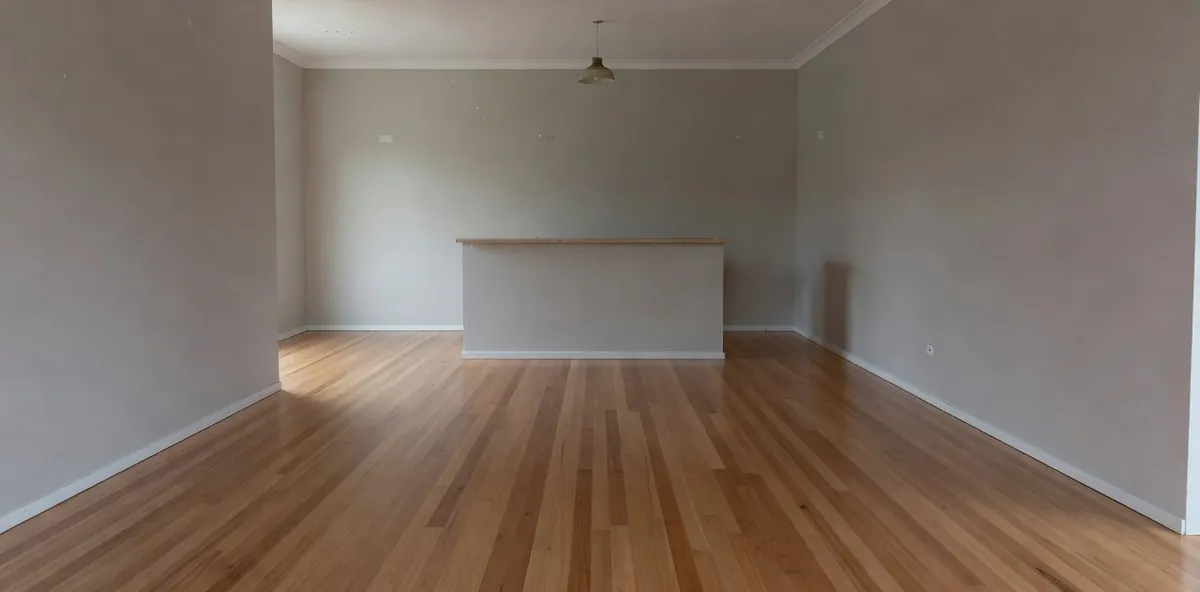
The work itself,start to finish

Sanding, coating, board repairs, staining and carpet lifts — the jobs that make up most of a week in Brisbane.

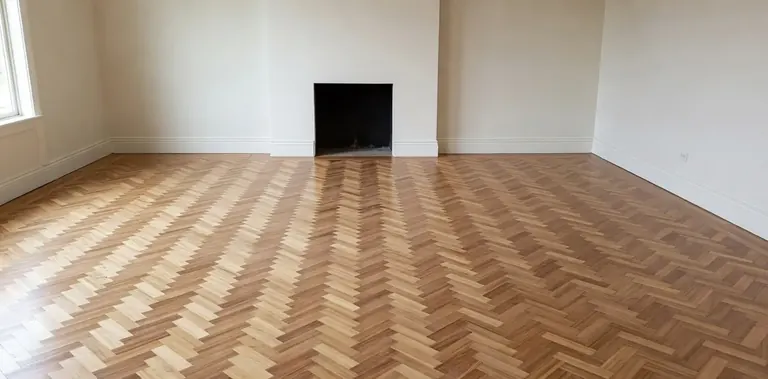
Timber floor work in Brisbane — carpet removal timber floors v2 480w 0c165a4bTimber floor work in Brisbane — carpet removal timber floors v2 768w 3de74dc1Timber floor work in Brisbane — carpet removal timber floors v2Timber floor work in Brisbane — engineered timber floors v2 480w be7152faTimber floor work in Brisbane — engineered timber floors v2 768w c4fab153Timber floor work in Brisbane — engineered timber floors v2Timber floor work in Brisbane — floor coatings and finishes v2 480w 45169c13Timber floor work in Brisbane — floor coatings and finishes v2 768w 11d85f15Timber floor work in Brisbane — floor coatings and finishes v2Timber floor work in Brisbane — floor polishing v2 480w 96e9e669Timber floor work in Brisbane — floor polishing v2 768w 6aa1ffbcTimber floor work in Brisbane — floor polishing v2Timber floor work in Brisbane — floor recoating v2 480w 137f1be6Timber floor work in Brisbane — floor recoating v2 768w 64c09885Timber floor work in Brisbane — floor recoating v2Timber floor work in Brisbane — floor sanding v2 480w 97c33d91Timber floor work in Brisbane — floor sanding v2 768w 537f36c3Timber floor work in Brisbane — floor sanding v2
Timber floor work in Brisbane — floor staining v2 480w b0f4b0abTimber floor work in Brisbane — floor staining v2 768w 4178ccb5Timber floor work in Brisbane — floor staining v2Timber floor work in Brisbane — floorboard repairs v2 480w f9b5f8baTimber floor work in Brisbane — floorboard repairs v2 768w 14eaebc9Timber floor work in Brisbane — floorboard repairs v2Timber floor work in Brisbane — parquetry restoration v2 480w 5414cec8Timber floor work in Brisbane — parquetry restoration v2 768w 1c8a0f00Timber floor work in Brisbane — parquetry restoration v2Timber floor work in Brisbane — timber deck sanding v2 480w 773ee9f3Timber floor work in Brisbane — timber deck sanding v2 768w c6bbfd2aTimber floor work in Brisbane — timber deck sanding v2Timber floor work in Brisbane — timber stair sanding v2 480w a59b1aadTimber floor work in Brisbane — timber stair sanding v2 768w 946985c6Timber floor work in Brisbane — timber stair sanding v2Timber floor work in Brisbane — water damaged floors v2 480w 7b9a1966Timber floor work in Brisbane — water damaged floors v2 768w 407c046cTimber floor work in Brisbane — water damaged floors v2

Get your floor looked at

Tell us the suburb, the rough area, and whether it's under carpet.

Call 0468 158 248